

The Blood of Dawnwalker best early build and skills
A level-banded early build: free passives first, sword mastery as the backbone, then Soul Reaping by day and Corruption by night, with manuals and gear priorities.


Independent first-hand playthroughs agree on the same point: establish sword mastery first, because it works in both forms.
Before spending any point, check one thing: whether that upgrade consumes story time. Learning some skills advances the 30-day clock, while the first two ranks of a passive usually cost nothing. That rule matters more than any single number.
Why sword mastery carries the early game
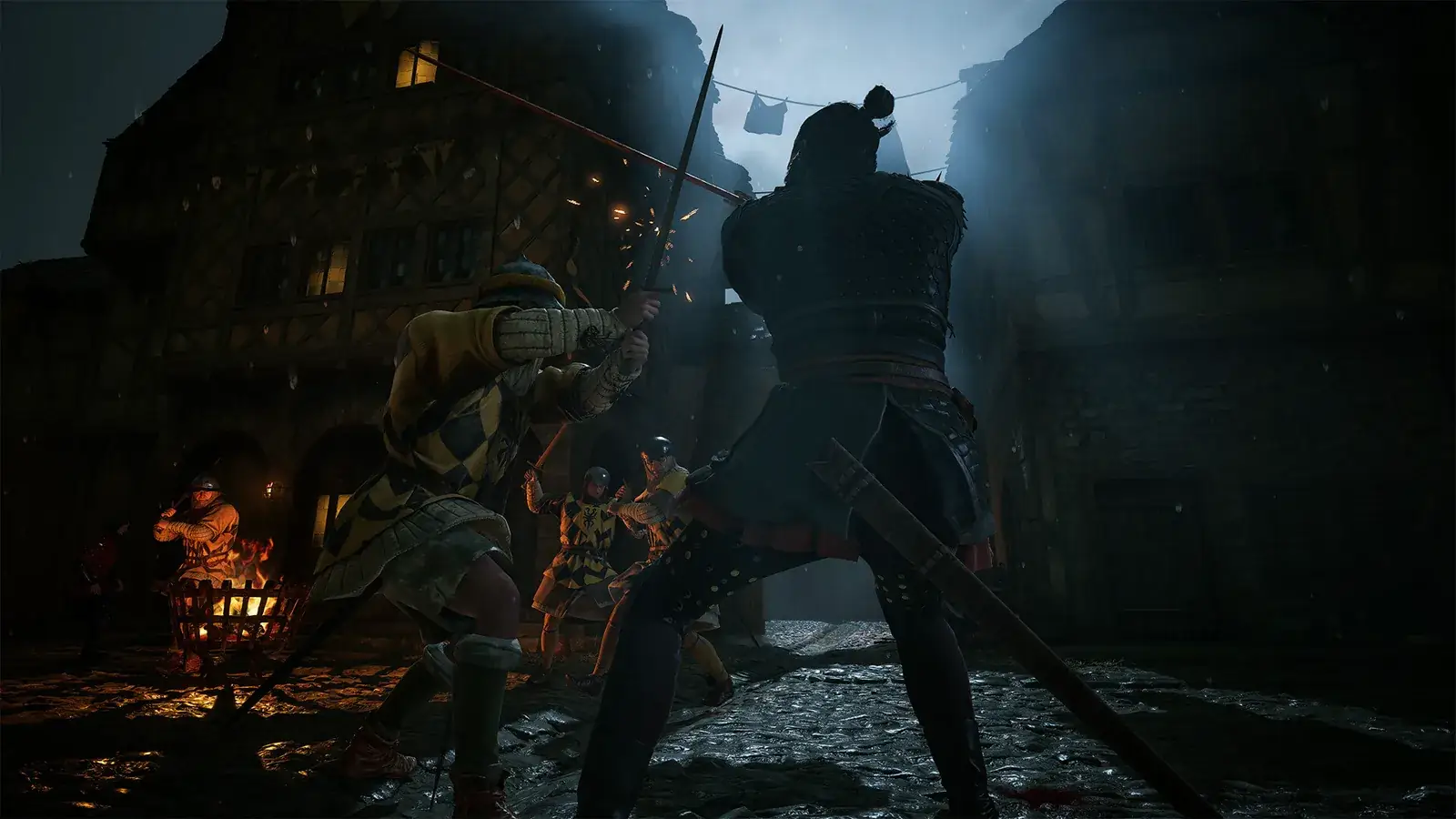
Coen fights with a sword and witchcraft by day, and with claws and vampire powers at night. Sword skills, though, apply in both forms.
The first-hand guides put it plainly: sword mastery is the only line that pays off around the clock. With limited points early, concentrating there is far steadier than spreading across three trees.
First priority: passives that cost no story time
| Skill | What it does | Why it comes first |
|---|---|---|
| Endless Effort | Large stamina increase | Stamina decides how long you can keep attacking and dodging |
| Sustained Focus | More activation charges | At rank three you start every fight with an extra charge, which multiplies how often you cast |
| Swiftness | Faster attacks, and crit chance after a perfect block once maxed | Perfect blocks are generous in this game, and the payoff covers swords and claws |
These three keep working as long as you play, so they are the natural first purchases between level 1 and level 15. What they share is that the upgrades themselves cost no story time, as the first row of passives usually starts free. You buy permanent value at zero clock cost.
Levels 1 to 15: secure the damage core
- Artery Strike is the most important early active. It applies bleed and carries a decapitation chance that climbs with ranks. First-hand guides rank it first because it is the one skill that ends multi-enemy fights quickly.
- Soul Reaping handles daytime sustain. It applies a damage-over-time effect that heals you, and since daytime has no equivalent of the night healing, this skill effectively covers your healing.
- Corruption drives night growth. Push vampire corruption toward its cap early to unlock the growth buffs, then transition into the mid game with claw-damage gear. On equipment, prioritise claw damage, maximum health and maximum stamina.
Levels 16 to 30: add a second line
Two directions open up in the mid game:
- Stay on swords: finish the offensive passives and unlock extra activation slots so Artery Strike and your spells can be carried together.
- Add Witchcraft: pick up debuffs such as Soul Stigma and the passives that extend duration, improving both daytime damage and sustain.
If you want night combat to be the main event, fill the extra-slot passives beyond Corruption and favour skills that stack growth effects.
Gear and crafting
- Do not chase legendary gear early. Scattered pieces with critical chance and critical damage lift your damage noticeably.
- Second Skin I and Second Skin II remove the medium and heavy armour penalties, and they gate wearing heavy armour. The first rank is available from village merchants outside the main city.
- Do not skip crafting. Upgrading gear is expensive, and materials come free while exploring.
- Defeating court-vampire bosses grants their signature passives. That is a one-time gain, so take it when you can.
Where the key manuals come from
Skills do not unlock from levels alone. You learn them from manuals.
- Ancient witch circles are the main source of Witchcraft manuals. Solve the puzzle inside and the manual is yours.
- Some manuals can be bought directly from witchcraft merchants.
- Sword actives come from specific side quests, or from sword masters who can teach and upgrade them.
Because learning a skill consumes story time, take the free passives first and then schedule manual learning in one block. Do not learn every skill the moment you see one.
What this build does not promise
This page gives no exact multipliers or damage-per-second figures. First-hand guides disagree about the value of individual skills, and numbers can shift in later hotfixes.
The order here is the consensus of several independent playthroughs, not a mandatory route. If you would rather run a pure vampire or pure witchcraft character, swap the sword passives for the equivalent options in that tree.
Sources
Related Articles

Guides
Choices and consequences
How timed actions, inaction, character deaths and competing priorities shape quests and outcomes in The Blood of Dawnwalker.
Guides
Endings and branches
Every ending branch by decision point: the three castle-assault allegiances, the deal with Brencis, the early secret endings, and why the counts differ.

Guides
Exploration and map
How Vale Sangora's map works in The Blood of Dawnwalker, where the regions get harder, and how to move around in daylight and at night.