

How day and night work in The Blood of Dawnwalker
Day and night explained: how time advances, what the eight daytime segments mean, and how Coen's human and vampire forms change quests, combat and exploration.

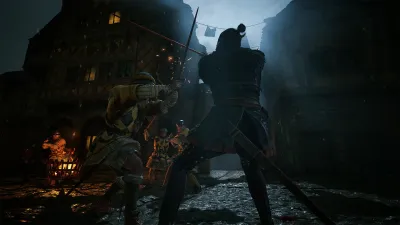
Day and night in The Blood of Dawnwalker are not a conventional cycle that changes automatically after a fixed number of real-world minutes. Time advances when you complete actions with a time cost or move between day and night. You can explore, watch, listen and practise without the clock constantly counting down.
Is there an automatic day and night cycle?
No. Bandai Namco’s gameplay recap says time moves forward only at specific progress points, such as completing certain objectives or changing from day to night. The official PlayStation explanation is even more direct: if Coen only wanders and observes without intervening, the sun stays in the sky and day does not become night.
This means there is no useful answer such as “30 minutes of day and 30 minutes of night.” Real-world play time and the in-game clock are deliberately separated.
How the time segments work
- Coen has 30 in-game days to try to save his family.
- The official PlayStation article describes the period from dawn to sunset as eight segments.
- Activities that advance time carry an hourglass icon showing their cost.
- Completing quests, making some dialogue choices, learning some abilities and switching between day and night can spend time.
- Ordinary exploration does not automatically consume those segments.
The 30-day deadline creates consequences, but it is not presented as a simple game-over timer. The developers told PlayStation that the story continues if time runs out, with the result changing according to what the player did and left undone.
What changes during the day and at night?
| Time | Coen’s form | Main tools and opportunities |
|---|---|---|
| Day | Human | Sword fighting, witchcraft and runic magic; some NPCs and quests are only available during the day. |
| Night | Vampire | Claws, supernatural senses and traversal abilities such as Shadowstep, Clawride and Planeshift; different NPCs, quests and routes become available. Blood hunger also becomes a risk that must be managed. |
The difference is practical, not cosmetic. In the official gameplay example, Coen investigates a cathedral during the day but needs his nighttime vampire traversal abilities to reach scaffolding and enter through a high opening. The same objective can therefore have different routes depending on when you pursue it.
How to plan around day and night
- Explore freely before committing to an action with an hourglass cost.
- Check whether the objective needs a daytime NPC, human magic or nighttime vampire movement.
- Treat changing from day to night as a decision that spends part of the campaign’s limited time.
- Remember that waiting does not solve a timed situation: the world advances through consequential actions, not by leaving the game running.
What remains unclear
The official sources explain the action-based system, the eight daytime segments and the 30-day deadline. They do not define a universal real-time length for a day or night because the system does not run on a fixed real-time clock.
Official sources
Related Articles
Combat
Combat guide
Directional sword combat, human witchcraft, vampire claws, feeding, progression and practical tactics for The Blood of Dawnwalker.
Guides
Choices and consequences
How timed actions, inaction, character deaths and competing priorities shape quests and outcomes in The Blood of Dawnwalker.
Guides
Gameplay explained
How exploration, quests, time, combat and Coen's human and vampire forms fit into The Blood of Dawnwalker's gameplay loop.