

How long is The Blood of Dawnwalker?
A sourced playtime guide separating the campaign estimate, a full first run and replay value from the 30-day story clock.
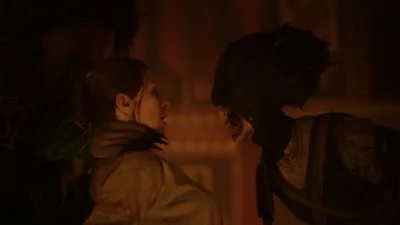
A typical The Blood of Dawnwalker playthrough is expected to take about 50 hours. Creative director Mateusz Tomaszkiewicz said recent internal completions ranged from roughly 50 to 70 hours, depending on difficulty, exploration, equipment upgrades and how selective the player is. The often-repeated 40-hour number was the studio’s earlier target, not its latest average.
Which number should you use?
| Play style | Sensible planning range | What it means |
|---|---|---|
| Focused story route | Around 40 hours is possible, but not the current average | Prioritise the family objective and a limited set of allies or upgrades |
| Typical first playthrough | Around 50 hours | Explore, complete selected side stories and prepare for major encounters |
| Thorough first run | Roughly 50–70 hours | Read more dialogue, investigate widely and pursue more optional content |
| Replay/alternate outcomes | 70+ hours total | Revisit choices, characters and routes excluded by the first campaign |
The estimate evolved during development. In 2025, the team described a 30–40 or roughly 40-hour campaign target. In April 2026, Tomaszkiewicz explained that the finished content had pushed the average to around 50 hours and produced 50–70-hour internal runs. Neither should be read as a guarantee: difficulty, exploration, reloads, reading speed and route selection change real playtime.
Why 30 in-game days does not mean 30 hours
The campaign gives Coen 30 days before his family’s planned sacrifice, but the clock advances through decisions, not continuous real time. Wandering, scouting and observing do not make the sun move. Timed quests, certain dialogue choices, learning some abilities and changing between day and night consume portions of the schedule.
That structure separates playtime from narrative time. A player can spend an hour investigating the world without losing a campaign segment, while a short conversation may advance the clock because its consequence matters. There is therefore no reliable formula such as “one in-game day equals one real hour.”
Why one run cannot be completionist
Rebel Wolves has repeatedly said that action and inaction both shape the story. Some characters, objectives and opportunities compete for the same limited time, and killing or abandoning a character can remove later content. The intended result is not a failed checklist; it is a coherent version of Coen’s story.
This affects completion estimates in two ways:
- You cannot measure a run by assuming every visible quest will be completed.
- Seeing substantially different branches requires another campaign or deliberate save exploration.
A 45-hour ending can therefore be “complete” even when many quests remain unseen. Conversely, a player who reads every clue and tests alternate outcomes may spend more than the quoted range without progressing farther on the calendar.
How to estimate your own run
Track three numbers separately for the first five in-game days: real hours played, timed actions completed and optional locations investigated. If five days take eight real hours, a direct multiplication still overstates the total because the prologue, learning curve and late-game structure differ, but it gives a more personal estimate than a generic database average.
For a first run, choose one priority among family rescue, alliance building, weakening Brencis or investigating Vale Sangora’s mysteries. Treat the unchosen material as replay value. This makes the clock useful instead of turning every hourglass into a source of anxiety.
What is still uncertain at launch
Community completion databases need enough verified player submissions before their averages become meaningful. Early reviews also use different definitions: some count credits, some count a thorough route, and some include multiple endings. This page therefore preserves the source ranges rather than presenting a falsely precise “main story” number.
Sources
Related Articles
Guides
Early build and skills
A level-banded early build: free passives first, sword mastery as the backbone, then Soul Reaping by day and Corruption by night, with manuals and gear priorities.
Guides
Choices and consequences
How timed actions, inaction, character deaths and competing priorities shape quests and outcomes in The Blood of Dawnwalker.
Guides
Endings and branches
Every ending branch by decision point: the three castle-assault allegiances, the deal with Brencis, the early secret endings, and why the counts differ.